
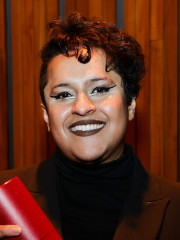
Mannat Kaur

Dr. ir. Mannat Kaur

Address
Max-Planck-Institut für Informatik
Saarland Informatics Campus
Campus E1 4
66123 Saarbrücken
Standort
E1 4 - 516
Telefon
+49 681 9325 3514
Fax
+49 681 9325 5719

Personal Information

Mannat studies the role of people within socio-technical systems, focusing on coordination—both among individuals and between people and technology—in the context of IT work. They are interested in working towards equitable digital infrastructure and creating supportive workplaces for those who manage this critical infrastructure. They employ qualitative and mixed-method research approaches, integrating feminist research principles into their work.

Publications

2026
Athar, S., Gosain, D., Feldmann, A., Kaur, M., & Dao, H. (n.d.). “Nobody should control the end user”: Exploring Privacy Perspectives of Indian Internet Users in Light of DPDPA. In 21st ACM ASIA Conference on Computer and Communications Security (ACM ASIACCS 2026). Bangalore, India: ACM. doi:10.1145/3779208.3785287
(Accepted/in press)
Export
BibTeX
@inproceedings{Athar_ASIACCS26, TITLE = {“Nobody should control the end user”: {E}xploring Privacy Perspectives of Indian Internet Users in Light of {DPDPA}}, AUTHOR = {Athar, Sana and Gosain, Devashish and Feldmann, Anja and Kaur, Mannat and Dao, Ha}, LANGUAGE = {eng}, DOI = {10.1145/3779208.3785287}, PUBLISHER = {ACM}, YEAR = {2026}, PUBLREMARK = {Accepted}, BOOKTITLE = {21st ACM ASIA Conference on Computer and Communications Security (ACM ASIACCS 2026)}, ADDRESS = {Bangalore, India}, }
Endnote
%0 Conference Proceedings %A Athar, Sana %A Gosain, Devashish %A Feldmann, Anja %A Kaur, Mannat %A Dao, Ha %+ Internet Architecture, MPI for Informatics, Max Planck Society External Organizations Internet Architecture, MPI for Informatics, Max Planck Society Internet Architecture, MPI for Informatics, Max Planck Society Internet Architecture, MPI for Informatics, Max Planck Society %T “Nobody should control the end user”: Exploring Privacy Perspectives of Indian Internet Users in Light of DPDPA : %G eng %U http://hdl.handle.net/21.11116/0000-0012-7187-4 %R 10.1145/3779208.3785287 %D 2026 %B 21st ACM ASIA Conference on Computer and Communications Security %Z date of event: 2026-06-01 - 2026-06-05 %C Bangalore, India %B 21st ACM ASIA Conference on Computer and Communications Security %I ACM
Amin, S. F., Athar, S., Feldmann, A., Dao, H., & Kaur, M. (2026). Navigating the Ethics of Internet Measurement: Researchers’ Perspectives from a Case Study in the EU. Retrieved from https://arxiv.org/abs/2511.10408
(arXiv: 2511.10408)
Abstract
Internet measurement research is essential for understanding, improving, and securing Internet infrastructure. However, its methods often involve large-scale data collection and user observation, raising complex ethical questions. While recent research has identified ethical challenges in Internet measurement research and laid out best practices, little is known about how researchers actually make ethical decisions in their research practice. To understand how these practices take shape day-to-day from the perspective of Internet measurement researchers, we interviewed 16 researchers from an Internet measurement research group in the EU. Through thematic analysis, we find that researchers deal with five main ethical challenges: privacy and consent issues, the possibility of unintended harm, balancing transparency with security and accountability, uncertain ethical boundaries, and hurdles in the ethics review process. Researchers address these by lab testing, rate limiting, setting up clear communication channels, and relying heavily on mentors and colleagues for guidance. Researchers express that ethical requirements vary across institutions, jurisdictions and conferences, and ethics review boards often lack the technical knowledge to evaluate Internet measurement research. We also highlight the invisible labor of Internet measurement researchers and describe their ethics practices as craft knowledge, both of which are crucial in upholding responsible research practices in the Internet measurement community.
Export
BibTeX
@online{Amin_2511.10408, TITLE = {Navigating the Ethics of Internet Measurement: Researchers' Perspectives from a Case Study in the {EU}}, AUTHOR = {Amin, Sahibzada Farhan and Athar, Sana and Feldmann, Anja and Dao, Ha and Kaur, Mannat}, LANGUAGE = {eng}, URL = {https://arxiv.org/abs/2511.10408}, EPRINT = {2511.10408}, EPRINTTYPE = {arXiv}, YEAR = {2026}, ABSTRACT = {Internet measurement research is essential for understanding, improving, and securing Internet infrastructure. However, its methods often involve large-scale data collection and user observation, raising complex ethical questions. While recent research has identified ethical challenges in Internet measurement research and laid out best practices, little is known about how researchers actually make ethical decisions in their research practice. To understand how these practices take shape day-to-day from the perspective of Internet measurement researchers, we interviewed 16 researchers from an Internet measurement research group in the EU. Through thematic analysis, we find that researchers deal with five main ethical challenges: privacy and consent issues, the possibility of unintended harm, balancing transparency with security and accountability, uncertain ethical boundaries, and hurdles in the ethics review process. Researchers address these by lab testing, rate limiting, setting up clear communication channels, and relying heavily on mentors and colleagues for guidance. Researchers express that ethical requirements vary across institutions, jurisdictions and conferences, and ethics review boards often lack the technical knowledge to evaluate Internet measurement research. We also highlight the invisible labor of Internet measurement researchers and describe their ethics practices as craft knowledge, both of which are crucial in upholding responsible research practices in the Internet measurement community.}, }
Endnote
%0 Report %A Amin, Sahibzada Farhan %A Athar, Sana %A Feldmann, Anja %A Dao, Ha %A Kaur, Mannat %+ External Organizations Internet Architecture, MPI for Informatics, Max Planck Society Internet Architecture, MPI for Informatics, Max Planck Society Internet Architecture, MPI for Informatics, Max Planck Society Internet Architecture, MPI for Informatics, Max Planck Society %T Navigating the Ethics of Internet Measurement: Researchers' Perspectives from a Case Study in the EU : %G eng %U http://hdl.handle.net/21.11116/0000-0012-7E22-9 %U https://arxiv.org/abs/2511.10408 %D 2026 %X Internet measurement research is essential for understanding, improving, and securing Internet infrastructure. However, its methods often involve large-scale data collection and user observation, raising complex ethical questions. While recent research has identified ethical challenges in Internet measurement research and laid out best practices, little is known about how researchers actually make ethical decisions in their research practice. To understand how these practices take shape day-to-day from the perspective of Internet measurement researchers, we interviewed 16 researchers from an Internet measurement research group in the EU. Through thematic analysis, we find that researchers deal with five main ethical challenges: privacy and consent issues, the possibility of unintended harm, balancing transparency with security and accountability, uncertain ethical boundaries, and hurdles in the ethics review process. Researchers address these by lab testing, rate limiting, setting up clear communication channels, and relying heavily on mentors and colleagues for guidance. Researchers express that ethical requirements vary across institutions, jurisdictions and conferences, and ethics review boards often lack the technical knowledge to evaluate Internet measurement research. We also highlight the invisible labor of Internet measurement researchers and describe their ethics practices as craft knowledge, both of which are crucial in upholding responsible research practices in the Internet measurement community. %K Computer Science, Human-Computer Interaction, cs.HC,Computer Science, Computers and Society, cs.CY,cs.SI
2025
Munot, S., Fiebig, T., & Kaur, M. (2025a). Compliance by Design or by Disguise? GDPR’s Reshaping of High-Ranked Universities' Privacy Policies. In WPES ’25, 24th Workshop on Workshop on Privacy in the Electronic Society. Taipei, Taiwan: ACM. doi:10.1145/3733802.3764047
Export
BibTeX
@inproceedings{MunotWPES25, TITLE = {Compliance by Design or by Disguise? {GDPR}'s Reshaping of High-Ranked Universities' Privacy Policies}, AUTHOR = {Munot, Simran and Fiebig, Tobias and Kaur, Mannat}, LANGUAGE = {eng}, ISBN = {979-8-4007-1898-4}, DOI = {10.1145/3733802.3764047}, PUBLISHER = {ACM}, YEAR = {2025}, MARGINALMARK = {$\bullet$}, DATE = {2025}, BOOKTITLE = {WPES '25, 24th Workshop on Workshop on Privacy in the Electronic Society}, EDITOR = {Zhou, Jianying and Reijsbergen, Dani{\"e}l and Chekole, Evasu Getahun}, PAGES = {183--197}, ADDRESS = {Taipei, Taiwan}, }
Endnote
%0 Conference Proceedings %A Munot, Simran %A Fiebig, Tobias %A Kaur, Mannat %+ Internet Architecture, MPI for Informatics, Max Planck Society Internet Architecture, MPI for Informatics, Max Planck Society Internet Architecture, MPI for Informatics, Max Planck Society %T Compliance by Design or by Disguise? GDPR's Reshaping of High-Ranked Universities' Privacy Policies : %G eng %U http://hdl.handle.net/21.11116/0000-0011-EF59-D %R 10.1145/3733802.3764047 %D 2025 %B 24th Workshop on Workshop on Privacy in the Electronic Society %Z date of event: 2025-10-13 - 2025-10-13 %C Taipei, Taiwan %B WPES '25 %E Zhou, Jianying; Reijsbergen, Daniël; Chekole, Evasu Getahun %P 183 - 197 %I ACM %@ 979-8-4007-1898-4
Athar, S., Gosain, D., Feldmann, A., Kaur, M., & Dao, H. (2025). “Nobody should control the end user”: Exploring Privacy Perspectives of Indian Internet Users in Light of DPDPA. Retrieved from https://arxiv.org/abs/2508.17962
(arXiv: 2508.17962)
Abstract
With the rapid increase in online interactions, concerns over data privacy and transparency of data processing practices have become more pronounced. While regulations like the GDPR have driven the widespread adoption of cookie banners in the EU, India's Digital Personal Data Protection Act (DPDPA) promises similar changes domestically, aiming to introduce a framework for data protection. However, certain clauses within the DPDPA raise concerns about potential infringements on user privacy, given the exemptions for government accountability and user consent requirements. In this study, for the first time, we explore Indian Internet users' awareness and perceptions of cookie banners, online privacy, and privacy regulations, especially in light of the newly passed DPDPA. We conducted an online anonymous survey with 428 Indian participants, which addressed: (1) users' perspectives on cookie banners, (2) their attitudes towards online privacy and privacy regulations, and (3) their acceptance of 10 contentious DPDPA clauses that favor state authorities and may enable surveillance. Our findings reveal that privacy-conscious users often lack consistent awareness of privacy mechanisms, and their concerns do not always lead to protective actions. Our thematic analysis of 143 open ended responses shows that users' privacy and data protection concerns are rooted in skepticism towards the government, shaping their perceptions of the DPDPA and fueling demands for policy revisions. Our study highlights the need for clearer communication regarding the DPDPA, user-centric consent mechanisms, and policy refinements to enhance data privacy practices in India.
Export
BibTeX
@online{Athar2508.17962, TITLE = {``Nobody should control the end user'': {E}xploring Privacy Perspectives of {I}ndian {I}nternet Users in Light of {DPDPA}}, AUTHOR = {Athar, Sana and Gosain, Devashish and Feldmann, Anja and Kaur, Mannat and Dao, Ha}, LANGUAGE = {eng}, URL = {https://arxiv.org/abs/2508.17962}, EPRINT = {2508.17962}, EPRINTTYPE = {arXiv}, YEAR = {2025}, MARGINALMARK = {$\bullet$}, ABSTRACT = {With the rapid increase in online interactions, concerns over data privacy and transparency of data processing practices have become more pronounced. While regulations like the GDPR have driven the widespread adoption of cookie banners in the EU, India's Digital Personal Data Protection Act (DPDPA) promises similar changes domestically, aiming to introduce a framework for data protection. However, certain clauses within the DPDPA raise concerns about potential infringements on user privacy, given the exemptions for government accountability and user consent requirements. In this study, for the first time, we explore Indian Internet users' awareness and perceptions of cookie banners, online privacy, and privacy regulations, especially in light of the newly passed DPDPA. We conducted an online anonymous survey with 428 Indian participants, which addressed: (1) users' perspectives on cookie banners, (2) their attitudes towards online privacy and privacy regulations, and (3) their acceptance of 10 contentious DPDPA clauses that favor state authorities and may enable surveillance. Our findings reveal that privacy-conscious users often lack consistent awareness of privacy mechanisms, and their concerns do not always lead to protective actions. Our thematic analysis of 143 open ended responses shows that users' privacy and data protection concerns are rooted in skepticism towards the government, shaping their perceptions of the DPDPA and fueling demands for policy revisions. Our study highlights the need for clearer communication regarding the DPDPA, user-centric consent mechanisms, and policy refinements to enhance data privacy practices in India.}, }
Endnote
%0 Report %A Athar, Sana %A Gosain, Devashish %A Feldmann, Anja %A Kaur, Mannat %A Dao, Ha %+ Internet Architecture, MPI for Informatics, Max Planck Society External Organizations Internet Architecture, MPI for Informatics, Max Planck Society Internet Architecture, MPI for Informatics, Max Planck Society Internet Architecture, MPI for Informatics, Max Planck Society %T "Nobody should control the end user": Exploring Privacy Perspectives of Indian Internet Users in Light of DPDPA : %G eng %U http://hdl.handle.net/21.11116/0000-0011-F3D0-F %U https://arxiv.org/abs/2508.17962 %D 2025 %X With the rapid increase in online interactions, concerns over data privacy and transparency of data processing practices have become more pronounced. While regulations like the GDPR have driven the widespread adoption of cookie banners in the EU, India's Digital Personal Data Protection Act (DPDPA) promises similar changes domestically, aiming to introduce a framework for data protection. However, certain clauses within the DPDPA raise concerns about potential infringements on user privacy, given the exemptions for government accountability and user consent requirements. In this study, for the first time, we explore Indian Internet users' awareness and perceptions of cookie banners, online privacy, and privacy regulations, especially in light of the newly passed DPDPA. We conducted an online anonymous survey with 428 Indian participants, which addressed: (1) users' perspectives on cookie banners, (2) their attitudes towards online privacy and privacy regulations, and (3) their acceptance of 10 contentious DPDPA clauses that favor state authorities and may enable surveillance. Our findings reveal that privacy-conscious users often lack consistent awareness of privacy mechanisms, and their concerns do not always lead to protective actions. Our thematic analysis of 143 open ended responses shows that users' privacy and data protection concerns are rooted in skepticism towards the government, shaping their perceptions of the DPDPA and fueling demands for policy revisions. Our study highlights the need for clearer communication regarding the DPDPA, user-centric consent mechanisms, and policy refinements to enhance data privacy practices in India. %K Computer Science, Human-Computer Interaction, cs.HC,Computer Science, Computers and Society, cs.CY
Munot, S., Fiebig, T., & Kaur, M. (2025b). “You just wanna sign on the dotted line and hope for the best”: Navigating the Cloudscapes of Higher Education. Proceedings of the ACM on Human-Computer Interaction (Proc. CSCW 2025), 9(7). doi:10.1145/3757448
Export
BibTeX
@article{Munot_CSCW25, TITLE = {``{Y}ou just wanna sign on the dotted line and hope for the best": {N}avigating the Cloudscapes of Higher Education}, AUTHOR = {Munot, Simran and Fiebig, Tobias and Kaur, Mannat}, LANGUAGE = {eng}, ISSN = {2573-0142}, DOI = {10.1145/3757448}, PUBLISHER = {ACM}, ADDRESS = {New York, NY}, YEAR = {2025}, MARGINALMARK = {$\bullet$}, DATE = {2025}, JOURNAL = {Proceedings of the ACM on Human-Computer Interaction (Proc. CSCW)}, VOLUME = {9}, NUMBER = {7}, PAGES = {1--44}, EID = {CSCW267}, BOOKTITLE = {Proceedings of the 28th ACM SIGCHI Conference on Computer-Supported Cooperative Work \& Social Computing (CSCW 2025)}, }
Endnote
%0 Journal Article %A Munot, Simran %A Fiebig, Tobias %A Kaur, Mannat %+ Internet Architecture, MPI for Informatics, Max Planck Society Internet Architecture, MPI for Informatics, Max Planck Society Internet Architecture, MPI for Informatics, Max Planck Society %T "You just wanna sign on the dotted line and hope for the best": Navigating the Cloudscapes of Higher Education : %G eng %U http://hdl.handle.net/21.11116/0000-0011-03C0-0 %R 10.1145/3757448 %7 2025-10-16 %D 2025 %J Proceedings of the ACM on Human-Computer Interaction %V 9 %N 7 %& 1 %P 1 - 44 %Z sequence number: CSCW267 %I ACM %C New York, NY %@ false %B Proceedings of the 28th ACM SIGCHI Conference on Computer-Supported Cooperative Work & Social Computing %O CSCW 2025
2023
Kaur, M., Ramulu, H. S., Acar, Y., & Fiebig, T. (2023). “Oh yes! over-preparing for meetings is my jam :)”: The Gendered Experiences of System Administrators. Proceedings of the ACM Human-Computer Interaction (Proc. CSCW 2023), 7(CSCW1). doi:10.1145/3579617
Export
BibTeX
@article{KaurCSCW23, TITLE = {``{Oh} yes! over-preparing for meetings is my jam :)'': {T}he Gendered Experiences of System Administrators}, AUTHOR = {Kaur, Mannat and Ramulu, Harshini Sri and Acar, Yasemin and Fiebig, Tobias}, LANGUAGE = {eng}, ISSN = {2573-0142}, DOI = {10.1145/3579617}, PUBLISHER = {ACM}, ADDRESS = {New York, NY}, YEAR = {2023}, MARGINALMARK = {$\bullet$}, DATE = {2023}, JOURNAL = {Proceedings of the ACM Human-Computer Interaction (Proc. CSCW)}, VOLUME = {7}, NUMBER = {CSCW1}, PAGES = {1--38}, EID = {141}, BOOKTITLE = {The 26th ACM Conference On Computer-Supported Cooperative Work And Social Computing (CSCW 2023)}, }
Endnote
%0 Journal Article %A Kaur, Mannat %A Ramulu, Harshini Sri %A Acar, Yasemin %A Fiebig, Tobias %+ External Organizations External Organizations External Organizations Internet Architecture, MPI for Informatics, Max Planck Society %T "Oh yes! over-preparing for meetings is my jam :)": The Gendered Experiences of System Administrators : %G eng %U http://hdl.handle.net/21.11116/0000-000B-A1A4-5 %R 10.1145/3579617 %7 2023 %D 2023 %J Proceedings of the ACM Human-Computer Interaction %O PACMHCI %V 7 %N CSCW1 %& 1 %P 1 - 38 %Z sequence number: 141 %I ACM %C New York, NY %@ false %B The 26th ACM Conference On Computer-Supported Cooperative Work And Social Computing %O CSCW 2023 October 13-18, 2023 (Minneapolis, MN, USA)
2022
Kaur, M., Parkin, S., Janssen, M., & Fiebig, T. (2022). “I needed to solve their overwhelmness”: How system administration work was affected by COVID-19. Proceedings of the ACM Human-Computer Interaction (Proc. CSCW 2022), 6, CSCW2. doi:10.1145/3555115
Export
BibTeX
@article{KaurCSCW22, TITLE = {``{I} needed to solve their overwhelmness'': {H}ow system administration work was affected by {COVID}-19}, AUTHOR = {Kaur, Mannat and Parkin, Simon and Janssen, Marijn and Fiebig, Tobias}, LANGUAGE = {eng}, ISSN = {2573-0142}, DOI = {10.1145/3555115}, PUBLISHER = {ACM}, ADDRESS = {New York, NY}, YEAR = {2022}, JOURNAL = {Proceedings of the ACM Human-Computer Interaction (Proc. CSCW)}, VOLUME = {6, CSCW2}, PAGES = {1--30}, EID = {390}, BOOKTITLE = {25th ACM Conference on Computer-Supported Cooperative Work and Social Computing (CSCW 2022)}, }
Endnote
%0 Journal Article %A Kaur, Mannat %A Parkin, Simon %A Janssen, Marijn %A Fiebig, Tobias %+ External Organizations External Organizations External Organizations Internet Architecture, MPI for Informatics, Max Planck Society %T "I needed to solve their overwhelmness": How system administration work was affected by COVID-19 : %G eng %U http://hdl.handle.net/21.11116/0000-000A-7B66-A %R 10.1145/3555115 %7 2022 %D 2022 %J Proceedings of the ACM Human-Computer Interaction %O PACMHCI %V 6, CSCW2 %& 1 %P 1 - 30 %Z sequence number: 390 %I ACM %C New York, NY %@ false %B 25th ACM Conference on Computer-Supported Cooperative Work and Social Computing %O CSCW 2022 Nov 8-22, 2022 (held virtually)
2021
Kaur, M., van Eeten, M., Janssen, M., Borgolte, K., & Fiebig, T. (2021). Human Factors in Security Research: Lessons Learned from 2008-2018. Retrieved from https://arxiv.org/abs/2103.13287
(arXiv: 2103.13287)
Abstract
Instead of only considering technology, computer security research now<br>strives to also take into account the human factor by studying regular users<br>and, to a lesser extent, experts like operators and developers of systems. We<br>focus our analysis on the research on the crucial population of experts, whose<br>human errors can impact many systems at once, and compare it to research on<br>regular users. To understand how far we advanced in the area of human factors,<br>how the field can further mature, and to provide a point of reference for<br>researchers new to this field, we analyzed the past decade of human factors<br>research in security and privacy, identifying 557 relevant publications. Of<br>these, we found 48 publications focused on expert users and analyzed all in<br>depth. For additional insights, we compare them to a stratified sample of 48<br>end-user studies.<br> In this paper we investigate:<br> (i) The perspective on human factors, and how we can learn from safety<br>science (ii) How and who are the participants recruited, and how this -- as we<br>find -- creates a western-centric perspective (iii) Research objectives, and<br>how to align these with the chosen research methods (iv) How theories can be<br>used to increase rigor in the communities scientific work, including<br>limitations to the use of Grounded Theory, which is often incompletely applied<br>(v) How researchers handle ethical implications, and what we can do to account<br>for them more consistently<br> Although our literature review has limitations, new insights were revealed<br>and avenues for further research identified.<br>
Export
BibTeX
@online{Kaur_2103.13287, TITLE = {Human Factors in Security Research: Lessons Learned from 2008-2018}, AUTHOR = {Kaur, Mannat and van Eeten, Michel and Janssen, Marijn and Borgolte, Kevin and Fiebig, Tobias}, LANGUAGE = {eng}, URL = {https://arxiv.org/abs/2103.13287}, EPRINT = {2103.13287}, EPRINTTYPE = {arXiv}, YEAR = {2021}, ABSTRACT = {Instead of only considering technology, computer security research now<br>strives to also take into account the human factor by studying regular users<br>and, to a lesser extent, experts like operators and developers of systems. We<br>focus our analysis on the research on the crucial population of experts, whose<br>human errors can impact many systems at once, and compare it to research on<br>regular users. To understand how far we advanced in the area of human factors,<br>how the field can further mature, and to provide a point of reference for<br>researchers new to this field, we analyzed the past decade of human factors<br>research in security and privacy, identifying 557 relevant publications. Of<br>these, we found 48 publications focused on expert users and analyzed all in<br>depth. For additional insights, we compare them to a stratified sample of 48<br>end-user studies.<br> In this paper we investigate:<br> (i) The perspective on human factors, and how we can learn from safety<br>science (ii) How and who are the participants recruited, and how this -- as we<br>find -- creates a western-centric perspective (iii) Research objectives, and<br>how to align these with the chosen research methods (iv) How theories can be<br>used to increase rigor in the communities scientific work, including<br>limitations to the use of Grounded Theory, which is often incompletely applied<br>(v) How researchers handle ethical implications, and what we can do to account<br>for them more consistently<br> Although our literature review has limitations, new insights were revealed<br>and avenues for further research identified.<br>}, }
Endnote
%0 Report %A Kaur, Mannat %A van Eeten, Michel %A Janssen, Marijn %A Borgolte, Kevin %A Fiebig, Tobias %+ External Organizations External Organizations External Organizations External Organizations External Organizations %T Human Factors in Security Research: Lessons Learned from 2008-2018 : %G eng %U http://hdl.handle.net/21.11116/0000-0011-292B-0 %U https://arxiv.org/abs/2103.13287 %D 2021 %X Instead of only considering technology, computer security research now<br>strives to also take into account the human factor by studying regular users<br>and, to a lesser extent, experts like operators and developers of systems. We<br>focus our analysis on the research on the crucial population of experts, whose<br>human errors can impact many systems at once, and compare it to research on<br>regular users. To understand how far we advanced in the area of human factors,<br>how the field can further mature, and to provide a point of reference for<br>researchers new to this field, we analyzed the past decade of human factors<br>research in security and privacy, identifying 557 relevant publications. Of<br>these, we found 48 publications focused on expert users and analyzed all in<br>depth. For additional insights, we compare them to a stratified sample of 48<br>end-user studies.<br> In this paper we investigate:<br> (i) The perspective on human factors, and how we can learn from safety<br>science (ii) How and who are the participants recruited, and how this -- as we<br>find -- creates a western-centric perspective (iii) Research objectives, and<br>how to align these with the chosen research methods (iv) How theories can be<br>used to increase rigor in the communities scientific work, including<br>limitations to the use of Grounded Theory, which is often incompletely applied<br>(v) How researchers handle ethical implications, and what we can do to account<br>for them more consistently<br> Although our literature review has limitations, new insights were revealed<br>and avenues for further research identified.<br> %K Computer Science, Computers and Society, cs.CY,Computer Science, Cryptography and Security, cs.CR,Computer Science, Human-Computer Interaction, cs.HC
2019
Kaur, M., De Boer, R. J., Oates, A., Rafferty, J., & Dekker, S. (2019). Restorative Just Culture: A Study of the Practical and Economic Effects of Implementing Restorative Justice in an NHS Trust. In 3rd International Cross-industry Safety Conference (ICSC) - 6th European STAMP Workshop & Conference (ESWC) (ICSC-ESWC 2018). Amsterdam, The Netherlands: EDP Sciences. doi:10.1051/matecconf/201927301007
Export
BibTeX
@inproceedings{Kaur_ISCS-ESWC18, TITLE = {Restorative Just Culture: {A} Study of the Practical and Economic Effects of Implementing Restorative Justice in an {NHS} Trust}, AUTHOR = {Kaur, Mannat and De Boer, Robert J. and Oates, Amanda and Rafferty, Joe and Dekker, Sidney}, LANGUAGE = {eng}, ISSN = {2261-236X}, DOI = {10.1051/matecconf/201927301007}, PUBLISHER = {EDP Sciences}, YEAR = {2018}, DATE = {2019}, BOOKTITLE = {3rd International Cross-industry Safety Conference (ICSC) -- 6th European STAMP Workshop \& Conference (ESWC) (ICSC-ESWC 2018)}, EID = {01007}, SERIES = {MATEC Web of Conferences}, ADDRESS = {Amsterdam, The Netherlands}, }
Endnote
%0 Conference Proceedings %A Kaur, Mannat %A De Boer, Robert J. %A Oates, Amanda %A Rafferty, Joe %A Dekker, Sidney %+ External Organizations External Organizations External Organizations External Organizations External Organizations %T Restorative Just Culture: A Study of the Practical and Economic Effects of Implementing Restorative Justice in an NHS Trust : %G eng %U http://hdl.handle.net/21.11116/0000-0011-2913-A %R 10.1051/matecconf/201927301007 %D 2019 %B International Cross-industry Safety Conference - European STAMP Workshop & Conference %Z date of event: 2018-10-31 - 2018-11-02 %C Amsterdam, The Netherlands %B 3rd International Cross-industry Safety Conference (ICSC) - 6th European STAMP Workshop & Conference (ESWC) (ICSC-ESWC 2018) %Z sequence number: 01007 %I EDP Sciences %B MATEC Web of Conferences %@ false

Research Interests

  • Human Factors
  • Human-Computer Interaction
  • System and Network Operations
  • Safety, Security and Privacy

Honours & Awards

Awarded recognition for contribution to Diversity and Inclusion in ACM CSCW 2023

Invited Talks & Key Notes

'Care in and for System Administration Work' at RIPE 87 Diversity, Equity and Inclusion in Tech Session.

Reviewing Activity & Workshop / Conference positions

  • Reviewer
    • ACM Conference on Human Factors in Computing Systems (CHI) 2025
    • ACM SIGCHI Conference on Computer-Supported Cooperative Work & Social Computing (CSCW) 2025
    • ACM Conference on Human Factors in Computing Systems (CHI) 2023
    • ACM SIGCHI Conference on Computer-Supported Cooperative Work & Social Computing (CSCW) 2023
    • Government Information Quarterly (GIQ) Journal 2023
    • ACM SIGCHI Conference on Computer-Supported Cooperative Work & Social Computing (CSCW) 2022
    • Ethics and Information Technology Journal 2020
  • PC member
    • SIG SIDAR Conference on Detection of Intrusions and Malware & Vulnerability Assessment (DIMVA) 2025
    • Workshop on Socio-technical Cybersecurity and Resilience in the IoT (STaR-IoT) 2022

Teachings

Recent Positions

March 2025 - current:
PostDoc, Max-Planck-Institut für Informatik, Forschungsgruppe Internet Architecture

April 2024 - Feb 2025:
Freelance Researcher, Max-Planck-Institut für Informatik, Forschungsgruppe Internet Architecture

April 2023 - April 2024:
Researcher, TU Delft, Faculty of Technology, Policy and Management, ICT section

Sept 2018 - Dec 2022:
PhD Researcher, TU Delft, Faculty of Technology, Policy and Management, ICT section

Jan 2018 - Sept 2018:
Safety consultant, Art of Work

Education

Sept 2018 - Dec 2023:
PhD, TU Delft, Advisor: Dr.-Ing. Tobias Fiebig, Promotor: Prof.dr.ir. M.F.W.H.A. (Marijn) Janssen | Title: Towards Safe and Just Work Environments for System Administrators: A Qualitative Sociotechnical Investigation into System Administration

Sept 2014 - Feb 2017:
MSc in Aerospace Engineering with a specialization in Air Traffic Operations and Safety, TU Delft, Advisor: Dr. O.A. (Alexei) Sharpans'kykh | Title: Causes, Identification & Repair of Loss of Common Ground in Coordination in Air Traffic Management

Sep 2010 - July 2014:
BE in Mechanical Engineering